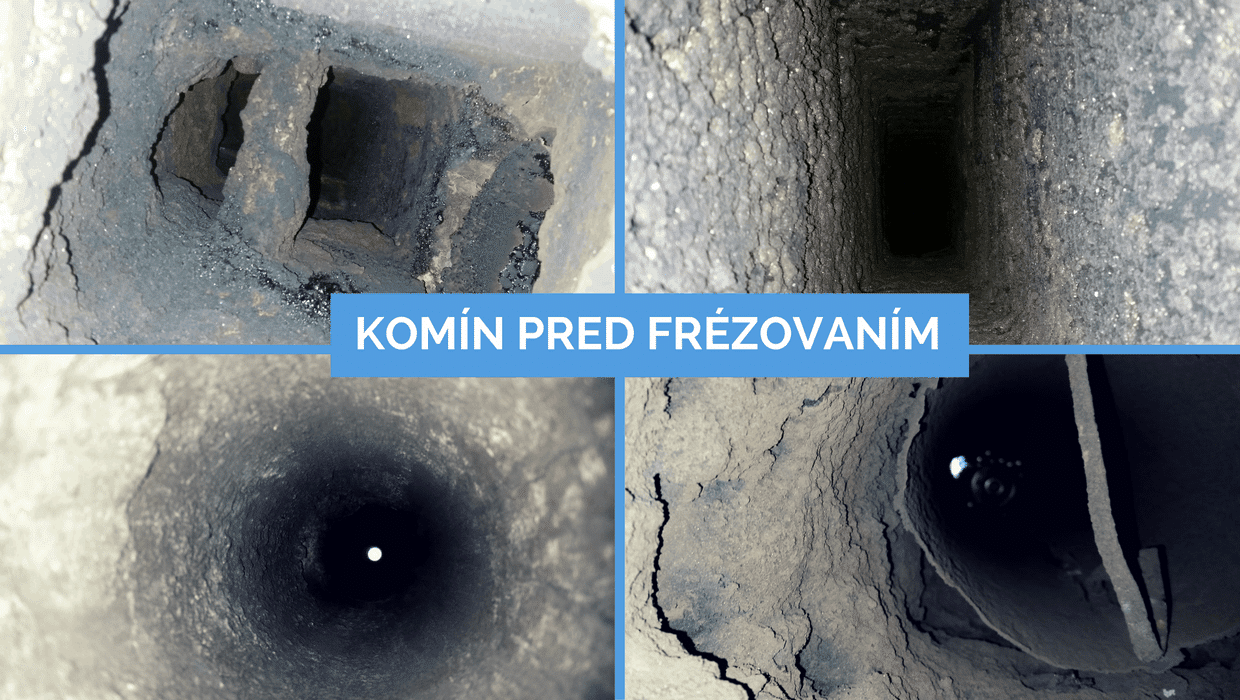
The fundamental problem of chimneys that need to be milled is tar build-up, which causes the small diameter of the chimney opening, or rather the use and release of flue gases in the chimney.
To restore the chimney's functionality, a new chimney insert must be fitted, which requires enlarging the diameter of the chimney opening.
To meet this requirement, the suitable option is the chimney cutter . This technology is very well known on the market and is used there. It has been practised for decades.
CHIMNEY MILLING IS CONSIDERED A COST-EFFECTIVE AND FAST WAY TO REFURBISH A CHIMNEY.
You can also repair the chimney in the classic way:
1.) by opening the chimney through longitudinal cutting of the masonry, which finanziell aufwendiger, more time-consuming and involves considerable effort in cleaning and finishing work.
2.) building a new chimney, which finanziell noch anspruchsvoller than the alternative in point 1.
Through chimney milling the costs are reduced and the complications you would expect if you chose another method — such as reconstructing the chimney by milling — are considerably simplified. The chimney cutter mills on the principle of centrifugal force, using a hydraulic pump running at more than 6000 rpm. With a chimney cutter, the diameter of both a straight and a bent chimney can be enlarged from ø 100 to ø 450 mm, without cutting into or damaging the chimney masonry.
Chimney milling is carried out through the chimney opening on the roof. Any material the chimney is built from can be milled. Chimneys are mostly built of fired bricks. Some chimneys have concrete lintels at the point where the chimney passes through the ceiling.
When milling a chimney, up to 35% of the chimney wall can be milled away. To prevent flue gases from penetrating the chimney walls, stainless steel inserts are placed into the milled chimney.